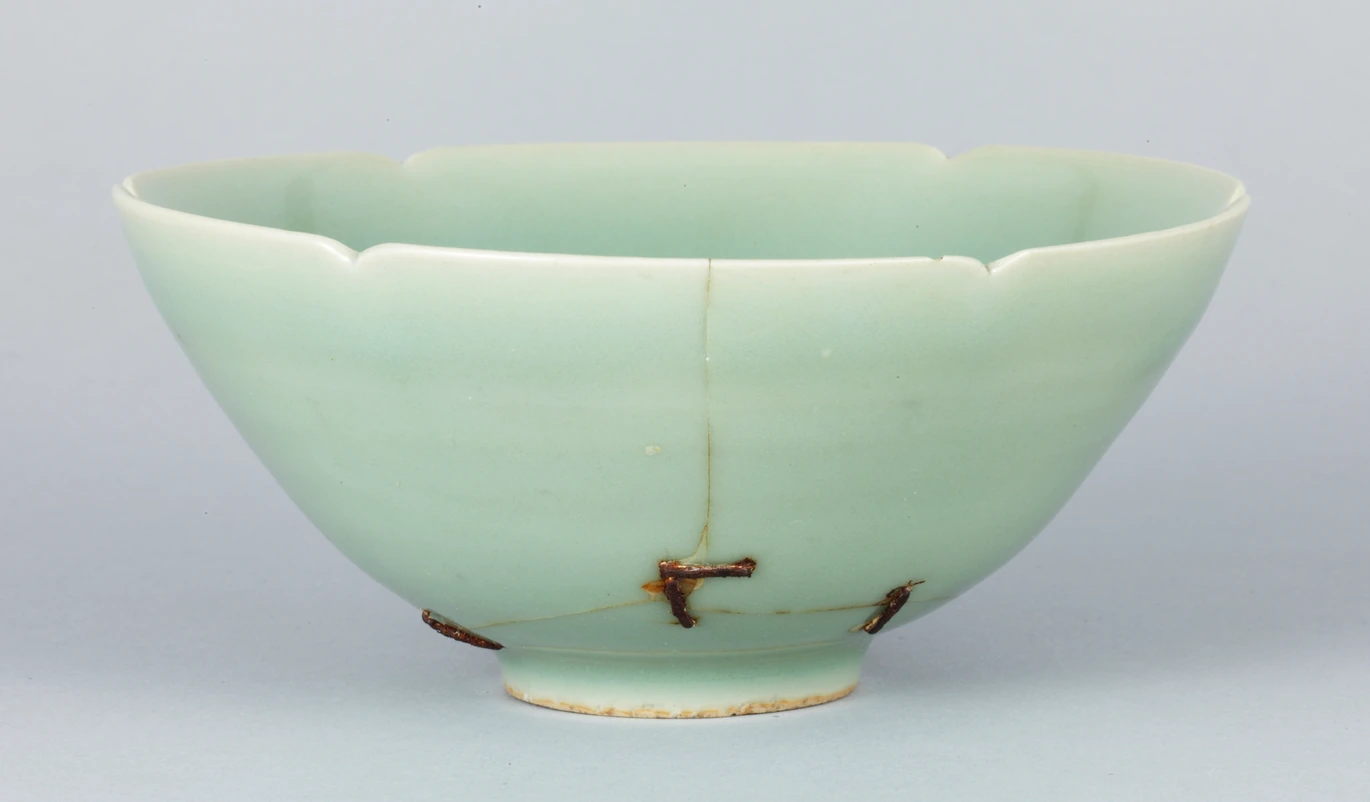
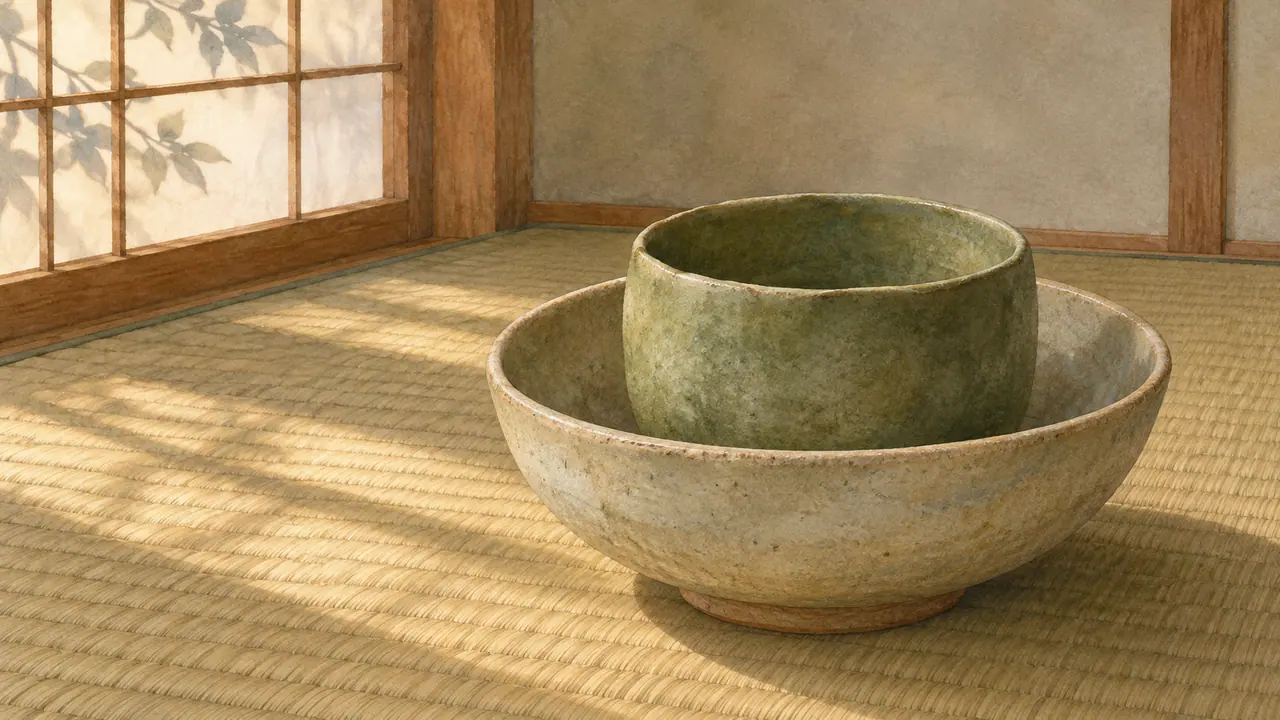
A fine crack runs down from the rim of a pale green tea bowl in the Tokyo National Museum. A rust-coloured bar crosses it. This is an iron staple, its two ends sunk into the ceramic on either side to keep the crack closed. The bowl, named Bakōhan, was made at the Longquan kilns…
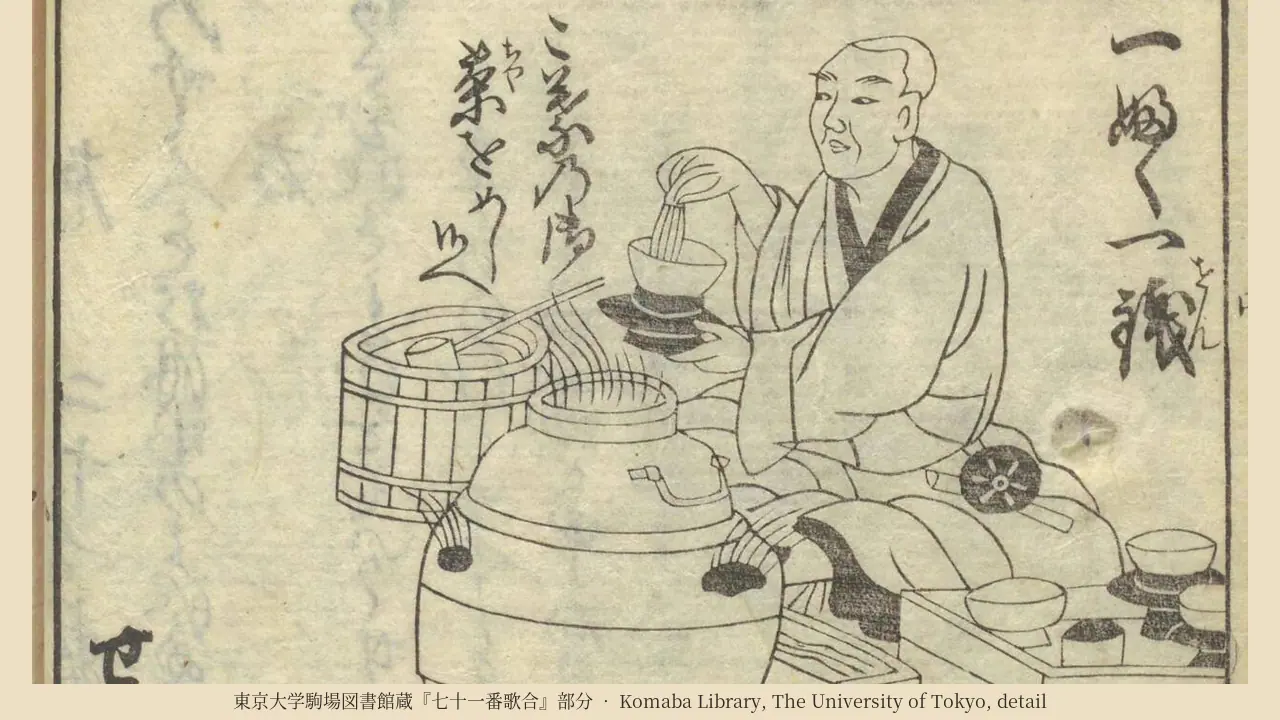
Outside the Great South Gate of Tōji, a Buddhist temple in Kyoto, traders sold a bowl of tea for a single copper coin. The trade was called ippuku issen, “one bowl, one coin.” In 1404 a fire broke out beside the gate among the sellers’ possessions. These included a brazier, a…
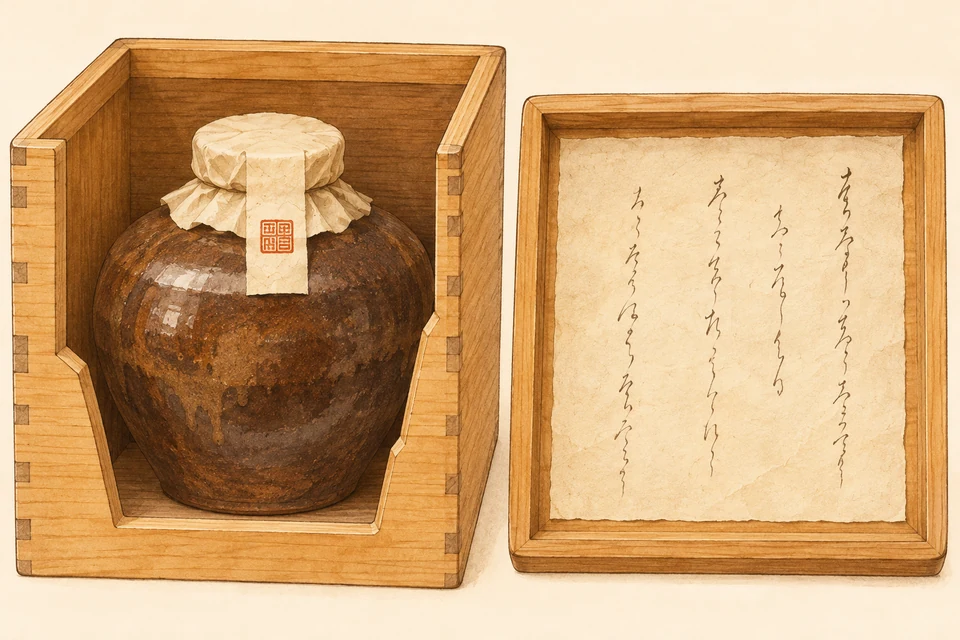
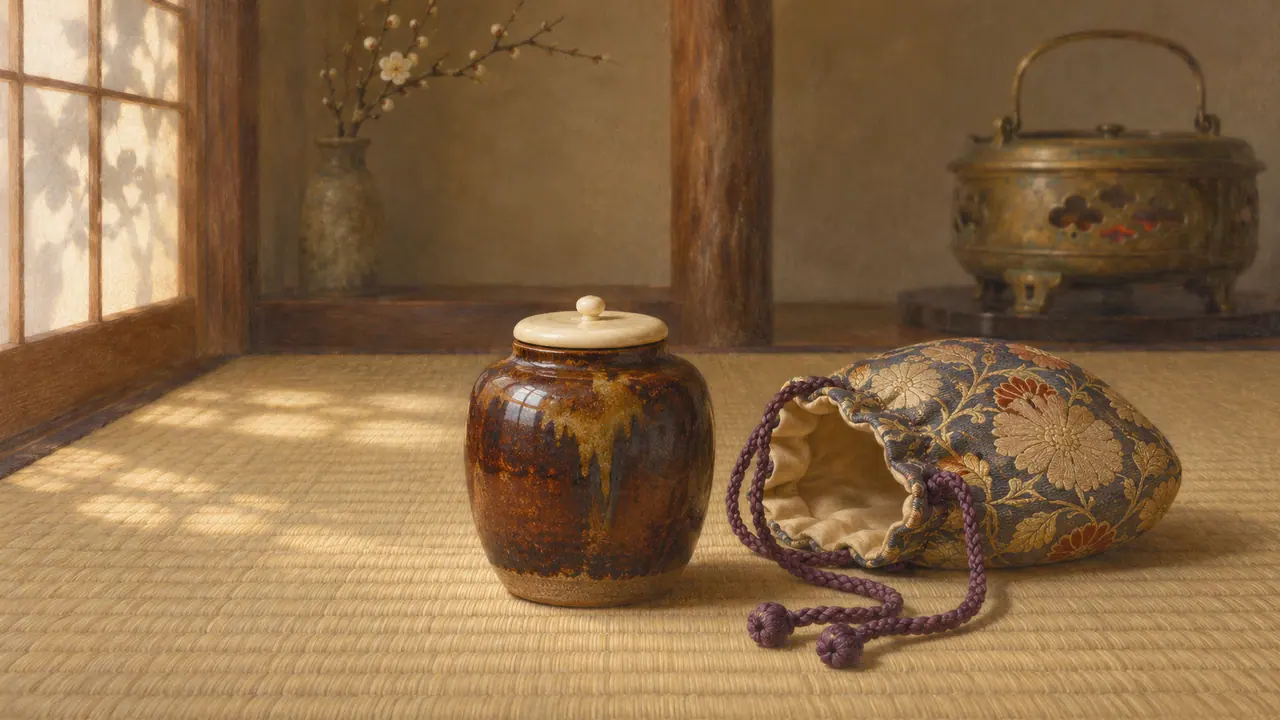
In Japan’s Edo period, tea makers in Uji, near Kyoto, sent out sealed jars of tea in wooden boxes. The recipient could find out which teas a jar held, how much of each and who had packed them, all without disturbing the paper seal. A packing record from 1833 even distinguishes…
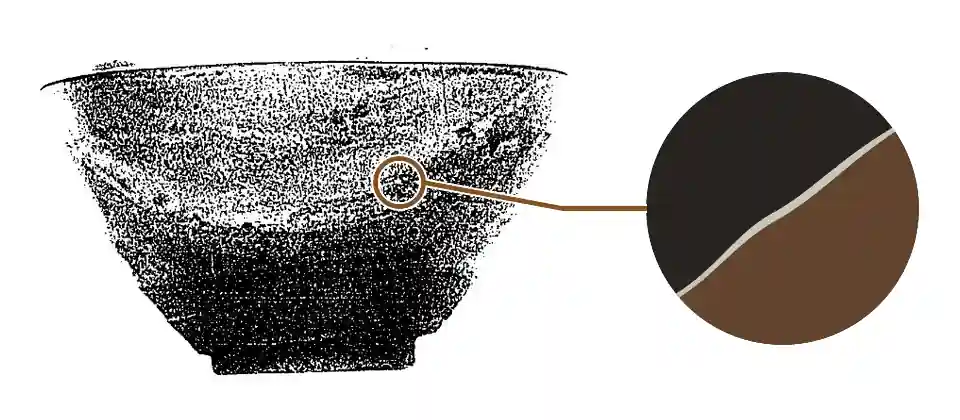
Why would a black tea bowl be called Niji (虹), “Rainbow”? In the Japanese Agency for Cultural Affairs’ color photograph, a silver line runs diagonally across its side. It formed in the kiln where the black glaze met the dark brown and gave this particular bowl its name. The bowl…
In this summer preparation, matcha is whisked with ice water. It does not appear in the Urasenke textbook used for these practice notes. A himuro was an icehouse: a pit dug in a shady spot where winter ice was kept for the imperial court from the first day of the fourth month…
A formal gathering usually proceeds from thick tea to replenishing the charcoal and then to thin tea. If a guest must leave early or the host has planned a shorter gathering, thin tea can follow thick tea directly, omitting the second charcoal service. This is called…
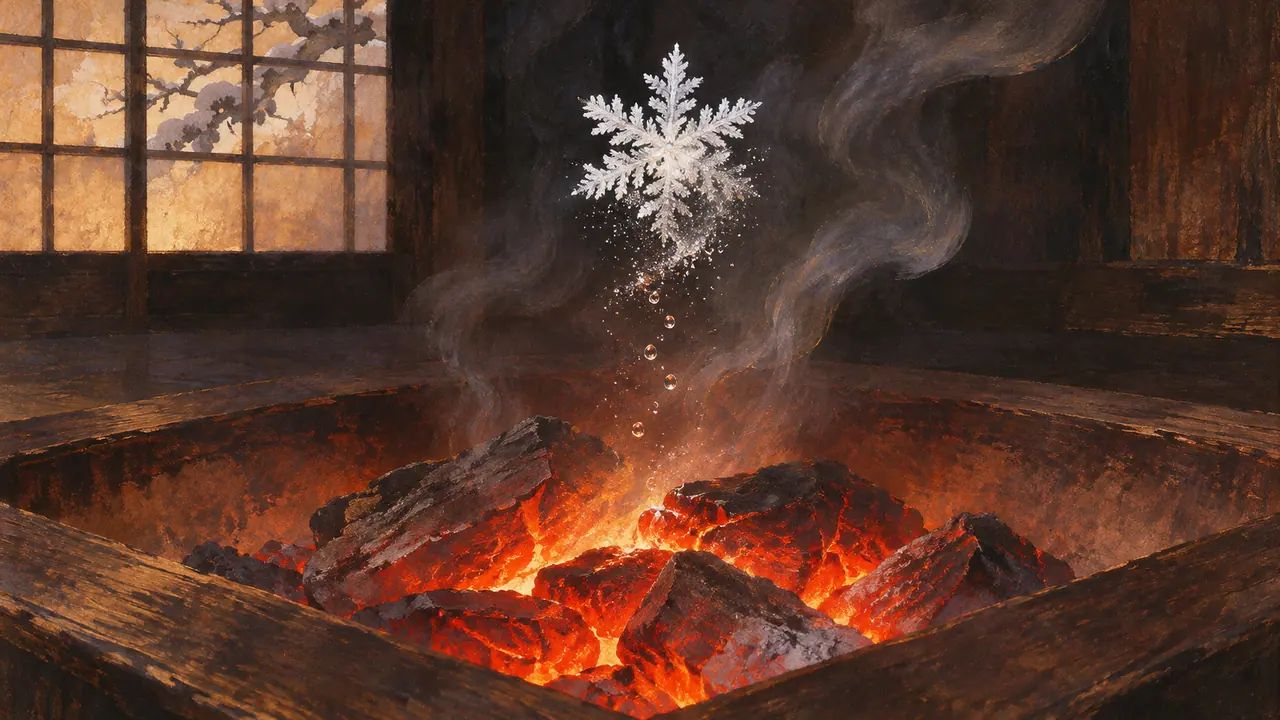
Case 69 of the Blue Cliff Record (Hekiganroku) gives the image of a single snowflake drifting into a glowing red hearth. Someone who has made their way through the thorns of training need no longer be caught or dragged along by distractions. In the heat of a fully engaged mind,…
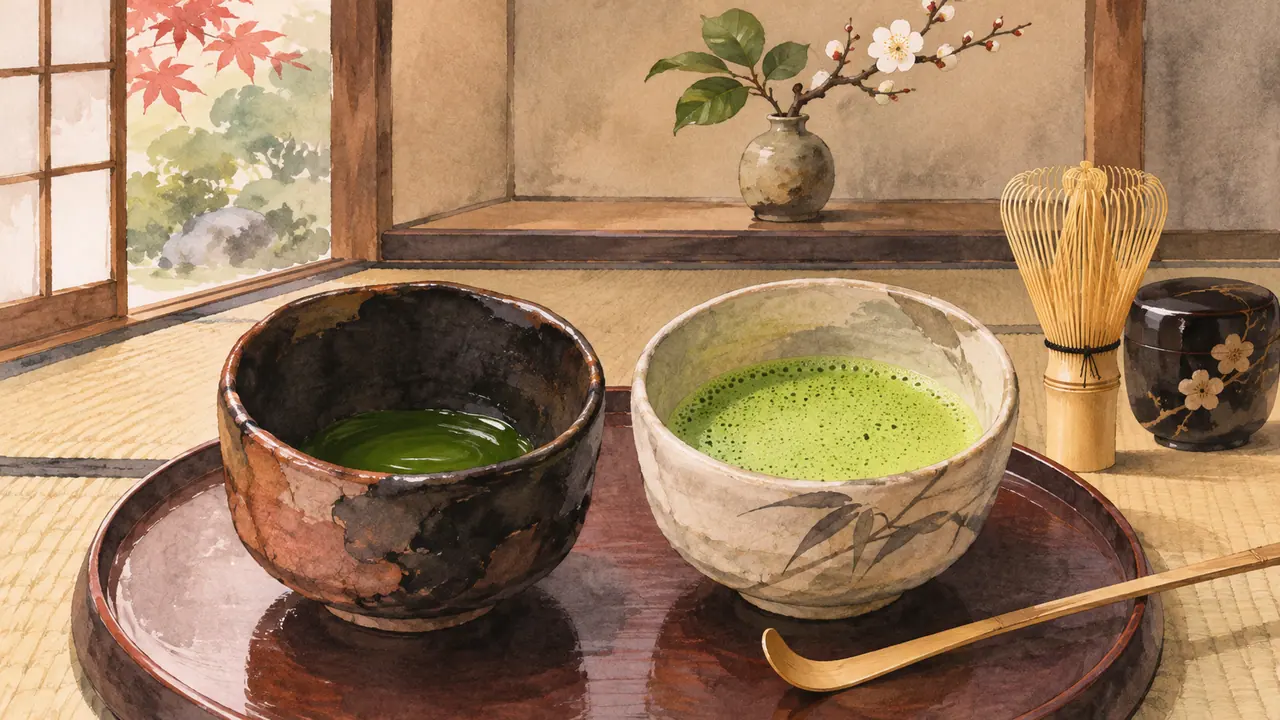
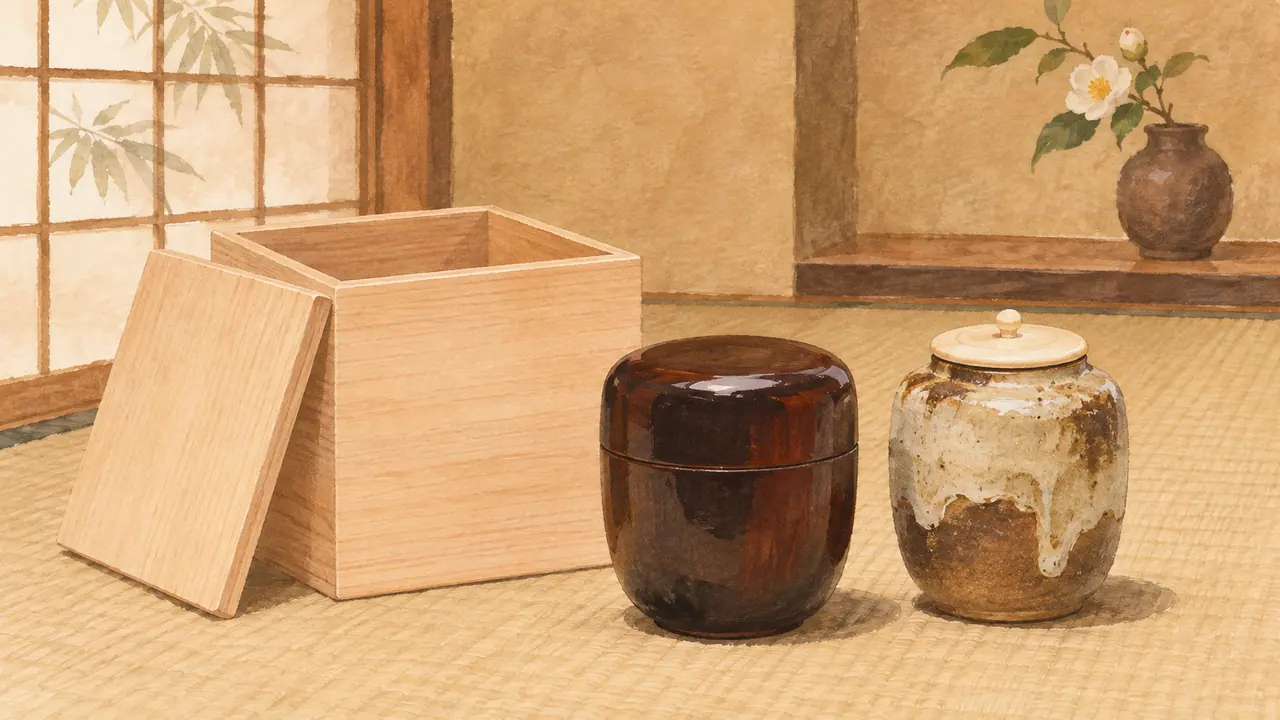
In the chatsūbako procedure the host offers two different thick teas, using a wooden tea box. Of the four Shikaden procedures, this is the one that seems to me to give particular weight to the relationship between host and guests. Preparing the tea box Put the natsume in its Ōtsu…
For the sunken hearth, sit facing the outer corner. Ordinary thick-tea service at the hearth faces the inner corner. Bring in the sweets. Everyone bows at the host’s entrance. Close the door. Sit at the entrance with the nested bowls before your knees. Open the door and go and…